
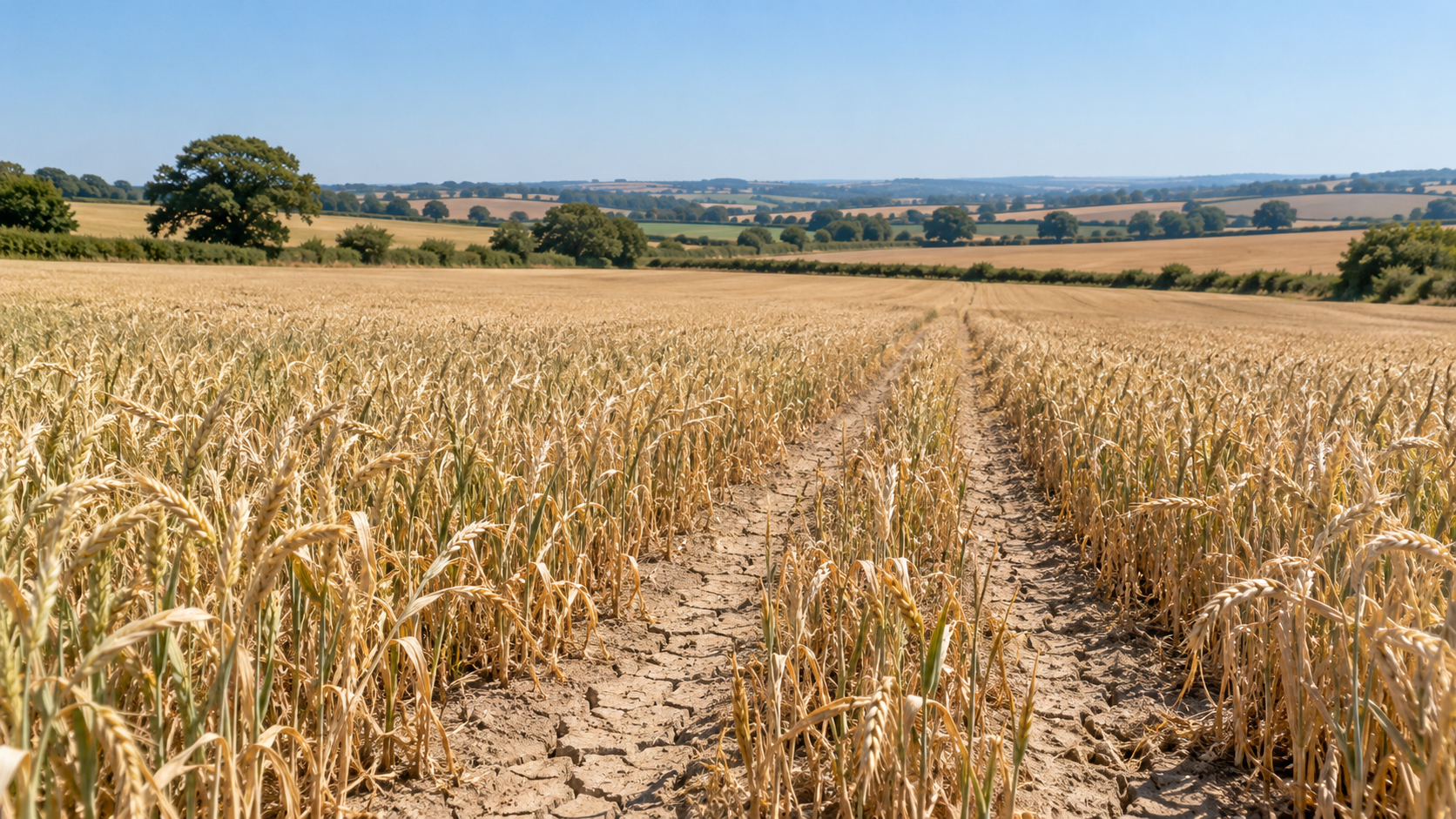
With this season’s potato yields around 11% below the 2021-2025 average and the prospect of more extreme weather in the future, UK potato growers need all the help they can get to combat heatwaves, droughts, and rising energy, fertiliser, and labour costs, with many turning to biostimulants.
Marcus Palmer, the UK distributor of the seaweed-based biostimulant Algifol, says he’s seen a recent rise in enquiries from concerned growers looking to increase the survival chances of next year’s potato crops.
“We know from field trials and feedback from customers that Algifol helps potatoes deal with challenging conditions, and if we continue to see extreme weather in the UK, growers are going to have to find new ways of helping their crops cope with the conditions,” he says.
UK field trials in challenging conditions delivered clear results. On Melody in Cheshire, three applications increased total tuber numbers by 29.6% and the valuable 40- 64 mm packing fraction by 27.3%, with tubers 22% heavier than untreated. Accord trials showed greater uniformity and an 18% weight gain; further work on Accord and Lady Rosetta recorded 7–13% more tubers. Growers report greener canopies that last longer under stress, more even size grades, and better overall quality.
Produced from concentrated North Atlantic brown algae, Algifol is rich in natural trace elements, vitamins, enzymes, amino acids, carbohydrates, polyuronides and growth-regulating hormones. Applied at just one litre per hectare, typically three times in the season (often tank-mixed with blight sprays), Algifol strengthens root systems, improves nutrient uptake and photosynthesis, and helps plants tolerate drought, heat, frost and waterlogging.
Beyond yield, improved fertiliser efficiency can reduce leaching and lower the crop’s carbon footprint—valuable for both margins and sustainability targets.