
AdBlue Tanks FAQ
Choosing the Right AdBlue Storage Tank for Your Farm, Fleet or Business
Choosing an AdBlue tank sounds simple until you start comparing sizes, pumps, bunding, flow rates, pipework, delivery access and storage rules. Many customers start with one basic question: “What size AdBlue tank do I need?” The better question is: “What tank will keep my vehicles running, protect the AdBlue from contamination, and suit the way my site actually works?”
MJP Supplies offers a specialist range of AdBlue storage tanks for farms, haulage yards, workshops, construction sites, local authorities, plant operators and larger commercial businesses. The range includes trusted tank manufacturers such as Enduramaxx, Atlantis Tanks and Tuffa Tanks, with options for smaller users through to high-volume sites.
This guide answers the questions customers often ask before buying an AdBlue tank, especially when they are not yet sure what they need.
An AdBlue tank is a purpose-made storage tank for AdBlue, also known as Diesel Exhaust Fluid or AUS 32.
AdBlue is used in modern diesel vehicles and machinery fitted with SCR systems. It helps reduce harmful nitrogen oxide emissions from exhaust gases. It is not a fuel additive and it does not go into the diesel tank. It has its own tank on the vehicle or machine.
A proper AdBlue tank is built from materials that are compatible with AdBlue. This matters because AdBlue can be easily contaminated by dirt, diesel, oil, rust, unsuitable metals, dust and even small amounts of the wrong liquid.
AdBlue is sensitive. It needs clean storage and compatible equipment.
A tank that has previously held diesel, oil, chemicals or water is not suitable unless it has been professionally prepared for AdBlue use. Even tiny traces of contamination can cause problems with the SCR system on a tractor, lorry, van, telehandler, loading shovel or generator.
The same applies to pumps, hoses, nozzles and fittings. They must be suitable for AdBlue. Standard diesel equipment should not be used.
If you run expensive machinery, the cost of a proper AdBlue tank is small compared with the cost of downtime, fault codes, blocked injectors or damaged SCR components.
For most farms, haulage companies, councils, contractors and commercial sites, a bunded AdBlue tank is the sensible choice.
A bunded tank has an outer containment layer around the inner tank. If the inner tank leaks, the bund helps contain the liquid. This is important because AdBlue can pollute watercourses, drains and soil.
AdBlue is not flammable like diesel, but that does not mean it can be stored carelessly. Businesses still have a duty to store it responsibly and reduce the risk of leaks or spills.
For larger businesses, bunded storage also helps demonstrate good site management, environmental care and sensible procurement.
AdBlue is not regulated in exactly the same way as oil storage, but it still needs proper handling.
The main points to consider are:
AdBlue should be stored in a clean, dedicated tank.
The tank, fittings, hose and nozzle should be compatible with AdBlue.
The tank should be protected from damage.
The tank should be sited away from drains and watercourses where possible.
A bunded tank is recommended for commercial, agricultural and industrial use.
Staff should know what to do if a spill happens.
Larger organisations may also need to consider environmental risk assessments, site drainage plans, spill kits, insurance requirements and internal health and safety procedures.
For procurement teams, it is worth asking suppliers whether the tank and its equipment are designed for AdBlue/AUS 32 and suitable for commercial use.
ISO 22241 is the recognised standard covering AdBlue quality, handling and storage.
For customers, the key point is simple: AdBlue must be kept clean. Storage tanks, pumps, hoses, nozzles and fittings must not contaminate the liquid.
A good AdBlue tank should be made from compatible materials and supplied with equipment suitable for AdBlue. This is especially important for businesses running Euro 6 lorries, modern tractors, plant machinery, vans, buses, coaches or generators.
If you are buying for a fleet, farm or public sector site, asking about ISO 22241 compatibility is a sensible procurement question.
The right size depends on how much AdBlue you use, how often you want deliveries, and how much space you have on site.
A small farm, workshop or low-use business may be suited to a 650 litre, 1,000 litre or 1,350 litre AdBlue tank.
A busy farm, contractor, plant yard or haulage operator may need 2,500 litres, 3,500 litres, 5,000 litres or 6,000 litres.
Large transport depots, agricultural contractors, local authorities and industrial users may need 7,500 litres, 10,000 litres or more.
The biggest tank is not always the best tank. AdBlue has a shelf life, so you should choose a size that matches your usage. A tank that turns over regularly is better than one where AdBlue sits for too long.
How do I work out my AdBlue usage?
A practical method is to look at how much diesel your vehicles or machines use.
Many modern diesel engines use AdBlue at a rate of around 3% to 6% of diesel consumption, although this varies by engine, workload and vehicle type.
For example, if a fleet uses 10,000 litres of diesel in a period, AdBlue use may be around 300 to 600 litres over the same period.
That estimate gives you a starting point. From there, think about delivery frequency. If you want fewer bulk deliveries, choose a larger tank. If your usage is seasonal, such as farming at harvest, do not oversize the tank so much that old AdBlue is left sitting.
What AdBlue tank is best for a farm?
Farms need practical storage. The tank may be used by several people, often outdoors, and usually near tractors, sprayers, combines, telehandlers or grain handling equipment.
- A good farm AdBlue tank should have:
- A bunded design.
- A compatible AdBlue pump.
- A clean hose and nozzle.
- A lockable cabinet or secure access point.
- A level gauge.
- A sensible capacity for seasonal use.
- A stable base with good delivery access.
For a small farm, a 1,000 litre or 1,350 litre tank may be enough. For a larger arable farm or contractor running several AdBlue machines, a 2,500 litre or 5,000 litre tank can make more sense.
Farms should also think about location. The tank needs to be easy to access with machinery, but not placed where it could be struck by trailers, loaders or delivery vehicles.
Haulage companies usually need fast, clean and reliable dispensing.
For a transport yard, the important questions are:
How many lorries refill AdBlue each day?
Will drivers use the tank without supervision?
Do you need to record usage by vehicle or driver?
Is mains power available?
Does the tank need extra security?
A busy haulage yard should look at a larger bunded dispensing tank with a 230V pump, automatic nozzle, good hose length and possibly a flow meter or fuel management system.
If drivers refill at the start or end of shifts, make the tank easy to use. Complicated equipment slows people down and encourages bad habits.
Construction and plant hire businesses need tough, secure and simple storage.
Plant operators often use machinery across different sites, so the tank setup depends on whether AdBlue is stored at the yard or taken closer to the work area.
For a main yard, a bunded static tank with electric dispensing is often the best choice.
For more remote sites, a smaller tank with 12V or 24V dispensing may be useful, depending on the setup.
Security matters. A lockable cabinet helps protect the pump, hose and nozzle from damage, misuse and contamination.
Public sector and facilities teams usually need neat, safe and auditable storage.
The tank may be used for minibuses, grounds machinery, vans, tractors, refuse vehicles, maintenance equipment or backup generators.
The key considerations are:
- Safe storage.
- Clear labelling.
- Bunded containment.
- Easy dispensing.
- Controlled access.
- Good records of use.
- Reduced risk of spills near drains or public areas.
For these sites, a tidy bunded AdBlue dispensing tank is usually a better option than drums or IBCs stored in different places.
AdBlue is used by many modern diesel generators with emissions control systems.
For backup power, the storage setup depends on how often the generator runs, how critical the site is, and whether the AdBlue needs to remain ready for long periods.
Hospitals, data centres, factories, food production sites and large commercial buildings should pay close attention to shelf life, temperature and monitoring.
A generator may not use AdBlue daily, so oversizing the tank can cause old stock to sit too long. In this case, controlled storage and planned rotation are important.
Each manufacturer has different strengths, so the right choice depends on the job.
Enduramaxx tanks are often considered for practical commercial, agricultural and industrial storage where a wide choice of capacities is needed.
Atlantis-style or Atlas-style tanks are often chosen for robust storage and dispensing applications where reliability and value matter.
Tuffa tanks are a strong option for commercial sites that need bunded AdBlue storage, dispensing equipment and higher specification options.
Rather than choosing by brand name alone, start with the real site requirement: capacity, bunding, pump type, hose length, security, installation space and daily usage.
MJP Supplies can help match the tank to the application instead of leaving customers to guess from a product image.
A storage tank holds AdBlue.
A dispensing tank stores AdBlue and includes equipment to transfer it into vehicles or machinery.
If you only need to store bulk AdBlue for use with separate equipment, a storage tank may be enough. If staff need to fill vehicles or machines directly from the tank, choose a dispensing tank.
Most farms, fleets and commercial users are better served by a dispensing tank because it keeps the process cleaner and quicker.
Do I need a pump with my AdBlue tank?
If you are regularly filling vehicles, tractors, lorries or plant machinery, yes.
Trying to handle AdBlue manually from drums or containers is messy and slow. It increases the risk of spills and contamination.
A proper AdBlue pump gives you cleaner transfer, better control and a more professional setup.
For a fixed yard with mains electricity, a 230V pump is usually the best option.
For remote locations or sites without mains power, a 12V or 24V pump may be more suitable.
A flow meter is useful if you want to know how much AdBlue is being dispensed.
For a single farm machine, it may not be essential. For a haulage fleet, plant hire yard, council depot or large business, it can be very useful.
A flow meter can help with:
- Tracking usage.
- Spotting unusual consumption.
- Allocating costs to vehicles or departments.
- Reducing waste.
- Improving stock control.
If AdBlue usage is becoming a meaningful operating cost, a meter is worth considering.
Large fleets and commercial sites may benefit from fuel management for AdBlue.
This can help record who used the tank, which vehicle was filled, how much was dispensed and when the transaction took place.
For smaller businesses, a simple pump and meter may be enough. For larger sites, proper usage tracking can reduce confusion and support better reporting.
This is especially useful where multiple drivers, operators or departments use the same tank.
Yes. AdBlue freezes at around minus 11°C.
That sounds worrying, but freezing does not automatically ruin the product. Once thawed correctly, AdBlue can usually be used again. The main issue is storage design and avoiding overfilling, as AdBlue expands when it freezes.
In Lincolnshire, long periods below minus 11°C are uncommon, but exposed rural sites can still get cold. If the tank sits in a very open yard, think about its position and whether any winter protection is needed.
Yes. AdBlue has a shelf life, and heat reduces it.
Cool, clean storage helps preserve quality. High temperatures and direct sunlight can shorten shelf life.
For most UK sites, the bigger risk is buying too much and leaving it unused for too long. Choose a tank size that suits your real turnover, not just the cheapest bulk delivery price.
If your site has low or seasonal usage, a smaller tank with more regular deliveries may be better than a large tank holding old AdBlue.
Choose a location that is safe, practical and accessible.
The tank should sit on a suitable flat base. It should be easy for delivery vehicles to reach, and easy for your own vehicles or machines to use.
Avoid placing the tank where it could be hit by forklifts, tractors, trailers, lorries or telehandlers. If there is a risk of impact, use barriers or choose a more protected location.
Also think about drains. A tank should not be placed where a spill would run straight into surface water drainage.
Most static AdBlue tanks need a firm, level and stable base.
Concrete is often the best option for commercial and agricultural sites. The base should support the tank when full, not just when empty.
A 5,000 litre AdBlue tank is carrying several tonnes of liquid, so the base matters. Poor siting can cause stress on the tank, pipework and dispensing cabinet.
Before ordering, check the tank footprint and make sure the proposed location can take the weight and allow safe access.
Yes. Many AdBlue tanks are designed for outdoor use.
The tank should still be properly sited, protected from damage and kept as clean as possible. AdBlue should be protected from unnecessary heat and contamination.
A bunded outdoor dispensing tank with lockable access is often the best option for farms, haulage yards and industrial sites.
AdBlue is not flammable and it is much less hazardous than diesel, petrol or many chemicals.
It can still cause problems if it gets into drains, watercourses or soil. It can also be corrosive to certain materials, which is why compatible equipment is so important.
Staff should avoid careless handling, keep the tank closed and clean up spills quickly.
No. Diesel and AdBlue must be kept completely separate.
Do not use diesel pumps, hoses, nozzles, funnels, cans or containers for AdBlue. Do not use AdBlue equipment for diesel.
Cross-contamination can cause expensive vehicle problems. Clear labelling and separate equipment make mistakes less likely.
Contaminated AdBlue can cause warning lights, poor SCR performance, blocked filters, injector issues and vehicle downtime.
The problem is not always obvious straight away. A small amount of dirt, diesel or unsuitable material can create faults later.
If contamination is suspected, stop using the tank and get advice before dispensing more AdBlue into vehicles or machinery.
Large businesses should treat an AdBlue tank as a site asset, not a quick purchase.
Before ordering, check:
- The tank capacity.
- The bunded capacity.
- The manufacturer.
- The material compatibility.
- The pump voltage.
- The flow rate.
- The hose length.
- The nozzle type.
- The cabinet security.
- The level gauge.
- The need for a meter or management system.
- The tank footprint.
- The filled weight.
- Delivery access.
- Installation requirements.
- Warranty and aftersales support.
- Replacement parts availability.
For procurement teams, it is also sensible to keep written confirmation that the tank and dispensing equipment are suitable for AdBlue/AUS 32.
Before replacing a tank, ask what went wrong with the old setup.
- Was it too small?
- Was it too slow to dispense?
- Was it exposed to damage?
- Was it hard to monitor stock?
- Was the cabinet insecure?
- Was delivery access poor?
- Was there a spill risk?
- Was the tank being used by too many people without control?
A replacement tank should solve the problem, not repeat it with newer plastic.
IBCs can work for some users, but they are not always the best long-term solution.
They can be awkward to secure, harder to manage neatly, and less suitable for busy yards. They may also encourage poor handling if staff use makeshift equipment.
A dedicated AdBlue dispensing tank gives a cleaner, safer and more controlled setup. For regular use, especially on farms and commercial sites, it is usually the better choice.
Bulk AdBlue is often more cost-effective for regular users.
Drums and smaller containers may suit very low usage, but they create more packaging, more handling and more mess.
Once a business uses AdBlue regularly, a bulk tank can save time and improve site organisation. The saving is not just the price per litre. It is fewer interruptions, cleaner refilling and better stock control.
Explore some of our AdBlue Tanks range...
-
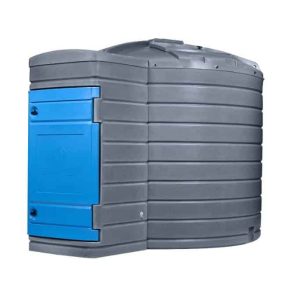
7500 Litre Plastic Bunded Tank for AdBlue®
Call for Price Call for Price -
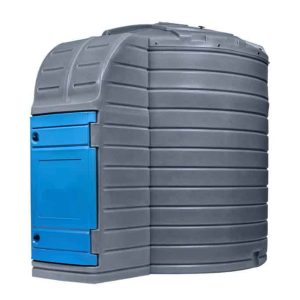
10000 Litre Plastic Bunded Tank for AdBlue®
Call for Price Call for Price -
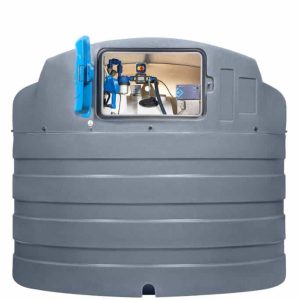
5000 Litre Plastic Bunded Tank for AdBlue®
Call for Price Call for Price -
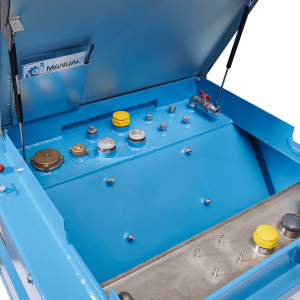
3000 Litre Diesel & 360 Litre AdBlue® Steel Bunded Dual PortaTank
Call for Price Call for Price -
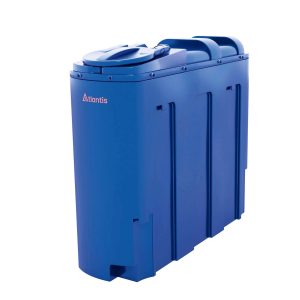
1000 Litre Plastic Bunded AdBlue® Storage Tank
Call for Price Call for Price -
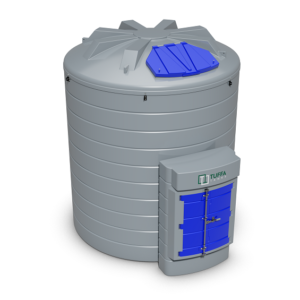
15000 Litre Adblue® Dispenser Tank
£12,080.68 – £17,690.84Price range: £12,080.68 through £17,690.84 Select options This product has multiple variants. The options may be chosen on the product page -
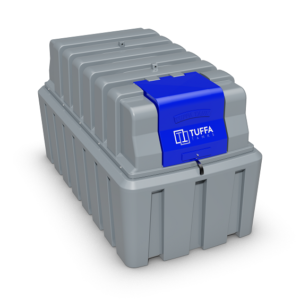
2500 Litre Adblue® Dispenser Tank
£4,234.60 – £4,727.05Price range: £4,234.60 through £4,727.05 Select options This product has multiple variants. The options may be chosen on the product page -
15000 Litre Adblue® Tank
£11,419.80 Add to basket -
2500 Litre Adblue® Tank
£2,953.43 Add to basket